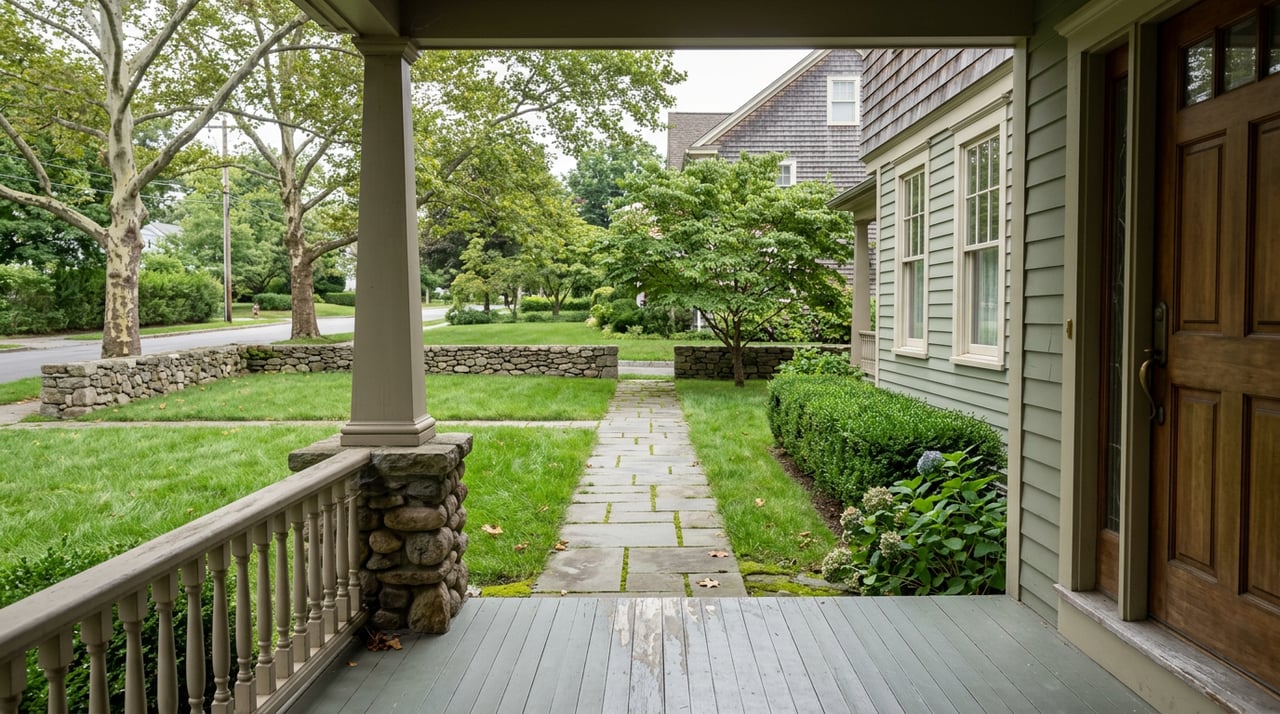
A buyer finds the kind of listing that gets circled in red: a century-old foursquare on a quiet Montford street, priced under the neighborhood average because it needs everything. New kitchen. New primary suite. Maybe a rebuilt porch. The listing photos show good bones and bad wiring, the kind of project that looks like a deal until you start pricing out the work. The buyer runs the renovation numbers, checks comparable sales two streets over, and writes an offer assuming the permitting process will run like it does anywhere else in Asheville.
It won't. Not because the contractor is wrong about the scope, and not because the county inspector is stricter here than elsewhere. It's because before a single permit gets pulled for anything beyond routine upkeep, the plans have to clear a citizen board that meets once a month, in a conference room downtown, and that board has real authority over whether the project looks the way the buyer imagined it.
Two Different Meanings of "Historic" in the Same Zip Code
Montford carries two historic designations that get talked about as if they're the same thing. They aren't. A National Register listing is largely honorific: it recognizes a building's age and character and can open the door to preservation tax credits, but it doesn't require anyone to ask permission before changing a window. A Local Historic District designation is different. It functions as a zoning overlay, and every property inside its boundary is subject to design review by the city's Historic Resources Commission.
Montford is both. It sits inside a National Register district, and it has also been a Local Historic District since 1981, which means the review requirement isn't a suggestion. It's the rule that governs whether the renovation the buyer pictured is the renovation the buyer gets to build.
The Board That Meets on the Second Wednesday
The Historic Resources Commission was created in 1979 through a joint ordinance between the city and Buncombe County. It has twelve members, six appointed by each government, serving three-year terms, and the board holds its regular monthly meeting on the second Wednesday at 4 p.m. in the North Conference Room of the Asheville City Building at 70 Court Plaza.
Anything more involved than maintenance, additions, new construction, replacement siding, window changes, has to go before that board and come back with a Certificate of Appropriateness before the city's permitting office will issue a building permit. The ordinance is explicit on this point: a certificate of appropriateness is required whether or not a building permit itself is required, and any permit issued without one is invalid. City planning staff have described the day-to-day scope of review as narrower than people expect. Cosmetic choices like paint color and shutter style typically aren't enforced. The line the board actually polices is work that goes beyond routine maintenance, which in practice covers additions, new construction, and any change to a structure's exterior form.
Two Blocks, Two Rulebooks
The clearest way to see what this designation actually does is to look at a neighborhood that no longer has it. Chestnut Hill, a short distance from Montford, was awarded local historic district status in 1988 by a narrow city council vote. By 1990, that local designation had been stripped, leaving Chestnut Hill on the National Register but without the Historic Resources Commission's design review. A local Asheville publication documented the practical difference this makes: a property owner in Montford who wants to significantly alter or demolish a century-old structure has to file with the commission, while an owner doing the same thing in Chestnut Hill today doesn't need that approval at all.
Same era of homes. Same distance from downtown. Different legal reality, because one neighborhood kept a designation the other one lost. That gap is the whole point: "historic" doesn't tell a buyer anything about process until they know which kind of historic they're standing in.
The One Rule With Real Teeth
The commission's strongest tool isn't a veto. It's a clock. If a property owner applies to demolish a structure the commission considers worth saving, the board can delay that demolition for up to 365 days while alternatives are explored, but it cannot deny the request outright. That single year is meant to give preservation advocates time to find a buyer or a different path forward, not to stop a determined owner permanently. For a buyer weighing a full teardown, that's a timeline risk worth pricing into the deal from day one, not discovering after the offer is accepted.
What the Numbers Say the Delay Is Worth
None of this shows up as a line item, but it shows up in price. As of July 2026, homes in Montford were listing at a median around $799,000, with an average sale price of $896,380 and a range running from roughly $375,000 up to $2.1 million depending on lot, square footage, and condition. That same month, the median list price per square foot in the historic core of the neighborhood ran close to $432. Compare that to Asheville overall, where the median sale price sat at $506,000 over the three months ending July 2026 and price per square foot averaged around $315 over that same window. Montford is running roughly a third higher on a per-square-foot basis than the city as a whole.
Zoom out further and the gap holds. The median listing price across the broader Asheville metro area was $585,975 in June 2026, well below what Montford itself was commanding a month later. Buyers aren't just paying for age and craftsmanship. They're paying for a mechanism that guarantees the block will keep looking the way it looks now, enforced by a board that reviews every meaningful change before it happens.
What's notable is what didn't happen to the timeline. Reported days on market in Montford in July 2026 ranged from the mid-50s to the mid-70s depending on the data source, landing at or only slightly above the citywide average of roughly 60 days over the same three-month window. If the certificate of appropriateness process were scaring buyers off, that gap would show up as much longer marketing times. It doesn't. Buyers appear to have already built the extra step into their expectations rather than treating it as a deal-breaker.
This is happening while the rest of Asheville is moving the opposite direction. The city's Unified Development Ordinance is undergoing a rewrite that launched in July 2026, and it's already streamlining approvals for many mid-sized projects that previously needed city council action. None of that touches Montford's review requirement. The four local historic districts in the city, Montford among them, sit outside the deregulation because their design review is a separate legal designation, not a general zoning rule the broader ordinance rewrite can loosen.
What This Means If You're Buying
If a Montford property is under consideration specifically because it needs work, the conversation with the city should happen before the offer, not after closing. Confirming whether a structure is considered contributing, and what scope of work the commission is likely to classify as a Major Work versus routine maintenance, changes how a due-diligence period or renovation contingency should be written. Because the board meets monthly, missing a given month's application cutoff doesn't just delay the meeting. It delays the whole project by that many weeks, stacked on top of the standard permitting timeline everywhere else in the city.
What This Means If You're Selling
For a seller who has already secured a Certificate of Appropriateness for planned or completed work, that approval is worth surfacing early rather than waiting for it to come up in inspection. It tells a renovation-minded buyer that the hardest part of the process, the uncertainty of what the commission will approve, has already been resolved. Given what the per-square-foot data shows about the premium buyers are willing to pay in this neighborhood, that kind of documentation is doing real work toward justifying the price.
A Few Questions Before You Write an Offer
Does painting my house a different color require approval? No. City staff have said cosmetic changes like paint and shutter choices generally fall outside what the commission enforces.
My house isn't listed as a contributing structure. Does that mean I skip review? Not inside Montford. Contributing status mostly affects eligibility for National Register tax credits. Because Montford is also a Local Historic District, every property within its boundary is subject to design review regardless of contributing status.
Can the commission actually stop a demolition? Not permanently. It can delay an approved demolition application for up to 365 days to allow time for alternatives, but state law doesn't give it the power to deny the request outright.
Buying or selling a house with this kind of history attached is rarely just a real estate question. It's a question about who gets to weigh in on what happens next, and how long that conversation takes. If you're weighing a Montford fixer-upper, or trying to figure out what your own renovated home is actually worth in this market, the Mike Miller Team has spent years working through exactly this kind of process with Asheville buyers and sellers. Start Your Buying or Selling Journey with a conversation about what your specific property, and its specific rules, actually allow.